A tour of Komodo National Park: turtles, manta rays, monitor lizards, and fantastic nature
When you fly from Bali with Garuda Indonesia to Flores, you will board a small propeller plane that looks a bit like it came out of a comic strip. The narrow aircraft, with its bold interior design (dirty seats, cramped seating, low ceilings), is your first step into a world that has little in common with the well-organized and established tourism of
Bali.
 How to get to Labuan Bajo
The easiest way to get to Flores / Labuan Bajo is clearly by flight. There are currently direct connections from e.g. Denpasar, Bali and Praya, Lombok. But Komodo Airport is also connected to other cities within Indonesia, including Jakarta and Surabaya. For more information on connections and available airlines, visit Skyscanner.
A journey (very long and exhausting) from Bali / Lombok via Sumbawa is also possible. The trip starts from the east of Lombok by ferry to Sumbawa, then to Bima and then to Sape, where you can take another ferry to Labuan Bajo. You can find even more information at our partner 12go.asia.
Note: From Lombok, you can also book a multi-day boat trip to Flores. A very popular provider is Perama Tours.
One night in Labuan Bajo is enough
Upon arriving in Flores after about 2 hours of flying, you can take a cheap taxi to the town of Labuan Bajo (the airport is almost within the city). You will probably be disappointed at first: narrow, dusty streets, hostels, and a few scattered restaurants—at first glance, Labuan Bajo doesn’t have much to offer. The impression persists.
After our arrival at the pleasant Danke Lodge, which is a bit outside the city center, we explored the surroundings on foot. The poverty that characterizes the eastern islands of Indonesia cannot be overlooked. Makeshift huts and sparse infrastructure dominate the landscape.
The population living in Labuan Bajo is predominantly Christian. However, the fishermen you will encounter on the way to the national park are Muslim (originally from other islands).
Fishermen keyword: Don’t miss the night market (Pasar Malam) in the center of Labuan Bajo (all locals know how to get there), where you can get fresh fish, shrimp, lobsters, mussels, and other delicacies at a very reasonable price. The chefs only speak Indonesian, but they certainly understand what they can prepare for you. Just point at it with your finger! The night market is not only visited by tourists but also by many locals, a sign that the food should be good!
After a restless night at the guesthouse (prices in Labuan Bajo are about 50% above the level of southern Bali, depending on the season), we set off to "check in" with our tour operator. We booked our tour in advance (after extensive research on TripAdvisor). We decided on Wunderpus Liveaboard.
In the office, our wetsuits, snorkels, and fins were fitted, and we had to pay (in addition to the tour price) several national park fees. These amount to 20 EUR (conversion rate as of January 2019) per day. The fees are requested by the government and are often modified or increased. Recently, the Jakarta Post published a statement from the regional governor: He is planning to raise the entrance fees to Komodo National Park to a considerable 500 USD (no joke) per day. So far, so surprising.
Wild Waves on the way to Komodo National Park
The start of our tour the next day was scheduled for seven o'clock, where we would meet our 5 international companions at the dock.
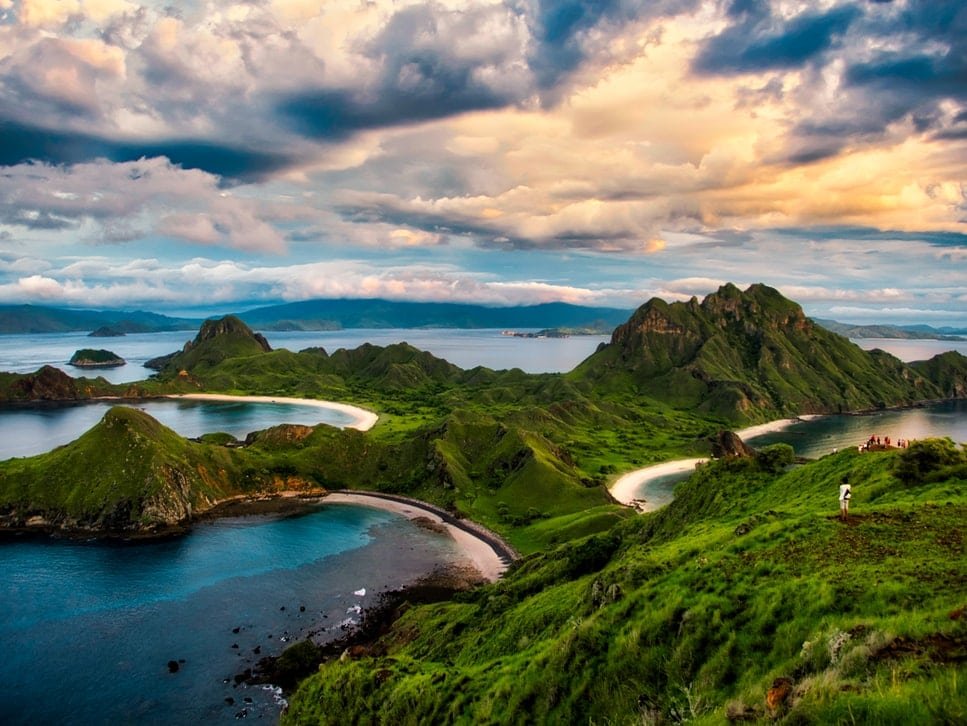
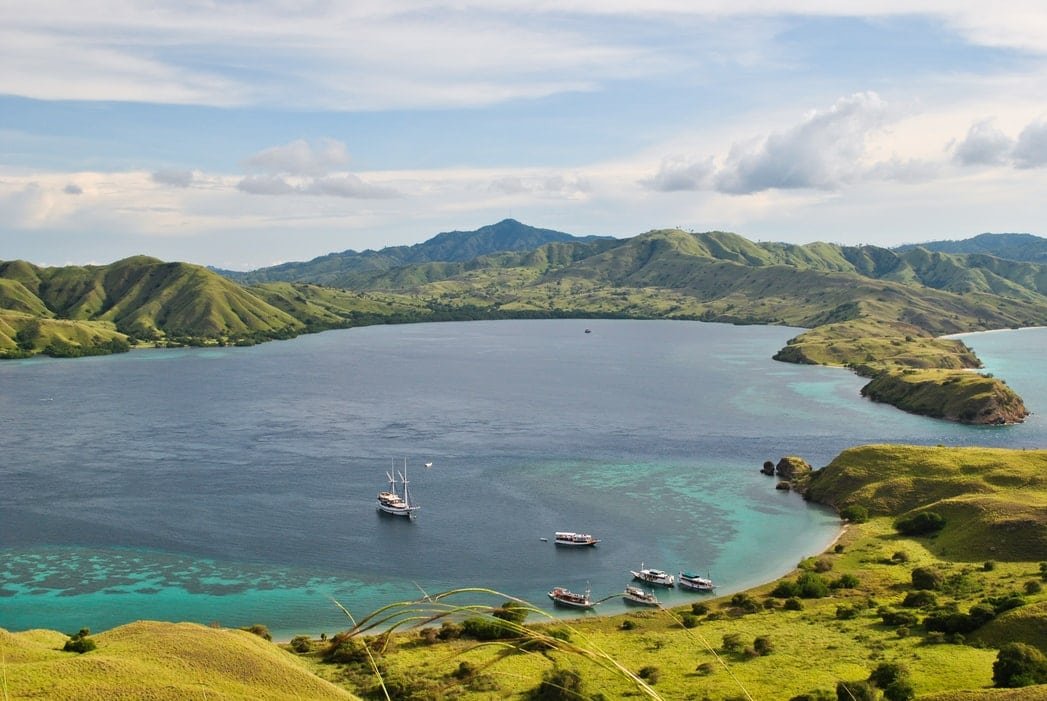
There we were taken to our boat, the "Mimic". An old traditional fishing boat where we were allowed to spend the next 3 days and 2 nights. The real Komodo National Park is 3-4 hours by boat from the port of Labuan Bajo. The journey there depends on the season (we were on our way in November) and is not for the faint-hearted (or stomach). However, you will be rewarded with a panorama (above and below the water!) that is unbeatable. Our first anchorage was Padar Island, an island that is only populated (according to the guide's statement) by "a few" Komodo dragons and their main dish, the deer.
Padar Island makes you sweat
The reason you must climb the sweaty steps to the top of Padar Island is the incredible view of 3 beaches in different colors: white, pink, and black. The guides made sure that we, the various groups of Chinese tourists and some backpackers, reached the summit in time for sunset. This view is hard to surpass and incomparable: gold, white, pink, black, and blue merge to create a magnificent view of the bay. It’s worth the climb!
The unique underwater world of Komodo National Park
Our night on the boat turned out to be interesting: the 6 guests slept on the upper deck, protected from the rain by a canopy. However, it was open on the sides, which made everyone wake up with the sunrise and prepare for the stacks of banana pancakes with Nutella, which were prepared in the small kitchen. A refreshing and delicious necessity for the next stage: snorkeling with the manta rays.
So we jumped into the water, looked down, and after a few seconds they floated up: magical creatures moving as if they were flying through the water. Imagine, these animals have a wingspan of up to 6 meters! More and more manta rays joined in. The place was a so-called cleaning station, where the rays lingered to be cleaned by smaller fish of parasites, fungi, and dirt. A washing facility, so to speak, and a beautiful display of nature that we simply could not get enough of.
For snorkeling (for diving, this is a fact), I recommend that you also wear a wetsuit, as it gets a bit cold in the water (even in the tropics) when waiting for rays, turtles, and other marine life.
During our trip, we saw manta rays, turtles, or reef sharks (white and black tip) at almost every diving and snorkeling stop. The biodiversity of this beautiful place literally takes your breath away.
Trekking on Komodo Island
The next day we finally headed to the namesake island of the park: Komodo Island.
Some brief facts about Komodo Island:
Komodo Island covers 390 km²
3000 Komodo dragons and 2000 residents live here
There is a small village school (up to fourth grade)
The area was declared a national park in 1980.
Komodo is one of the driest places in the Indonesian archipelago. This can be observed in the vegetation, which impresses with its rather rough charm dominated by sand, dust, and bone-colored tree trunks. When we arrived on the island, we were warmly welcomed by the local rangers and allowed to choose between different trails along the island, aptly named "Short Trek", "Medium Trek", and "Long Trek". We took the medium one and it took us just over an hour. Each group was accompanied by at least 2 rangers, one walking in front and another behind, each equipped with a stick. Walking alone on the island is not allowed (and not smart).
If you decide to hike in Komodo (which can almost only be booked along with a diving and snorkeling safari), stock up on sunscreen, mosquito repellent, and a bottle (not plastic!) of water: the scorching heat of the island should not be underestimated.
Monitor lizards - cannibal dragons
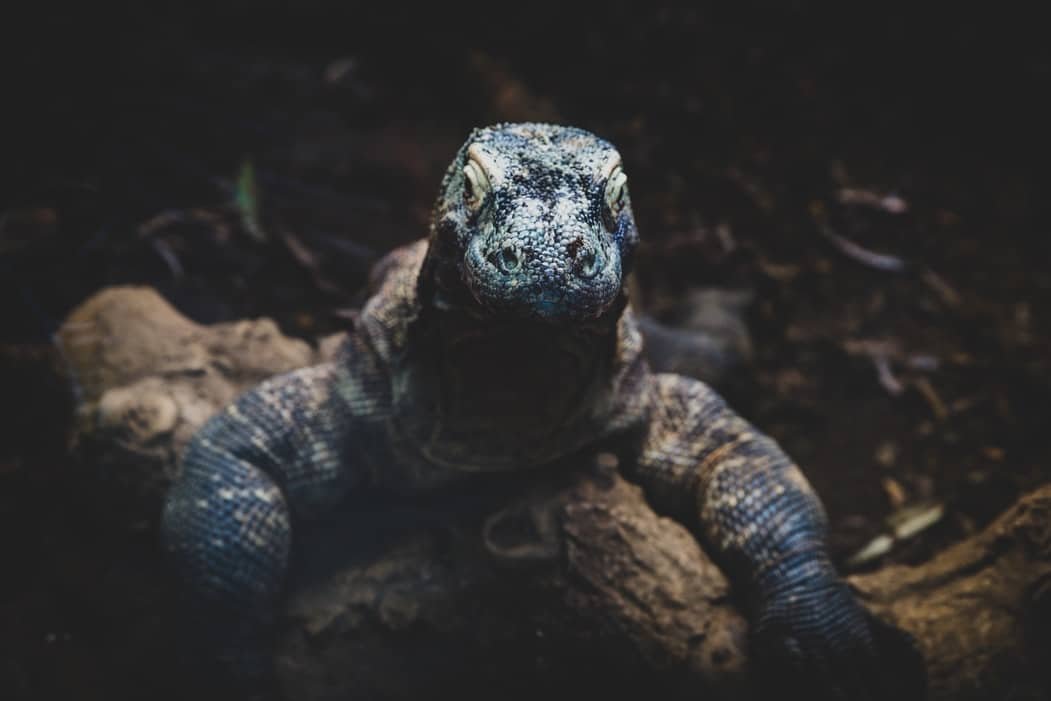
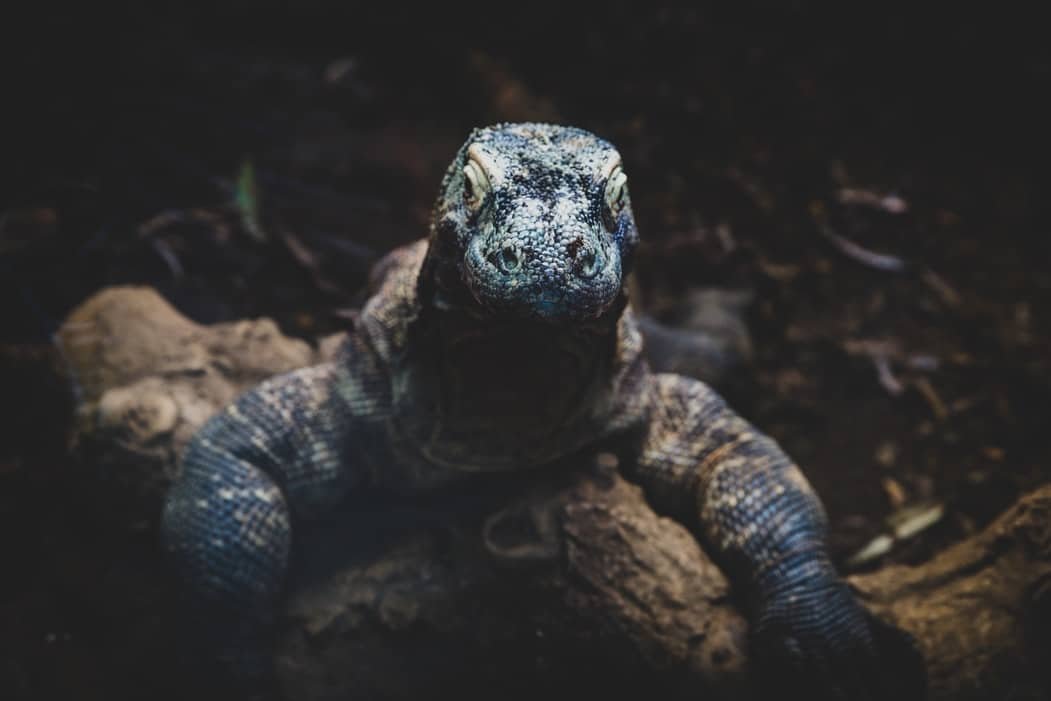
After quite some time, we were finally able to see the first Komodo dragons moving slowly but steadily (they can run up to 20 km/h fast if they want) across the hot sand. Imagine them as mini dinosaurs. With their forked tongue, they are able to capture scents in the air, so they are constantly in action, moving back and forth similarly to a snake's tongue.
The guide told us that Komodo dragons only eat once a month; it takes them between 15 and 20 minutes to devour a goat or a deer. As the digestion and decomposition of their food takes a long time, the lizards lie in the sun after a meal to speed up digestion. If they didn’t, the prey would rot in the dragon's belly and poison it from the inside. Most of the lizards we saw moved back and forth under the sun quite calmly.
Not so fun facts about Komodo dragons:
Dragons weigh on average 70 kg and are considered an endangered species; they can only be found on Komodo, Rinca, and Padar.
Komodo dragons are cannibals, and they also like to eat their young! These are rescued by spending the first years of their lives mainly in trees.
There have been some incidents involving humans and lizards, so staying on the paths and following the rangers increases the chances of not becoming a dragon snack.
Despite these somewhat intimidating facts, I highly recommend visiting these prehistoric-looking animals. By visiting them, you are also helping to maintain the National Park and preserve many rare species of endangered fauna and flora.
It’s worth it to visit Komodo!
After arriving by boat in Labuan Bajo on the third day, we enjoyed a pizza at La Cucina, a popular restaurant with homemade Italian cuisine among Italians and other tourists with its beautiful view of the harbor and the illuminated boats. Here you can relax and finish your trip, share adventure stories with other travelers, or just eat a pizza.
A trip to Komodo is certainly not a comfortable journey for leisure and rest, but an adventure to marvel at, sweat, experience, and discover unforgettable sunsets, strange primitive animals, elegant manta rays, and feel the salt on your skin. Visit it whenever the entrance is reasonable and the islands are not yet filled with tourists, it’s worth it!