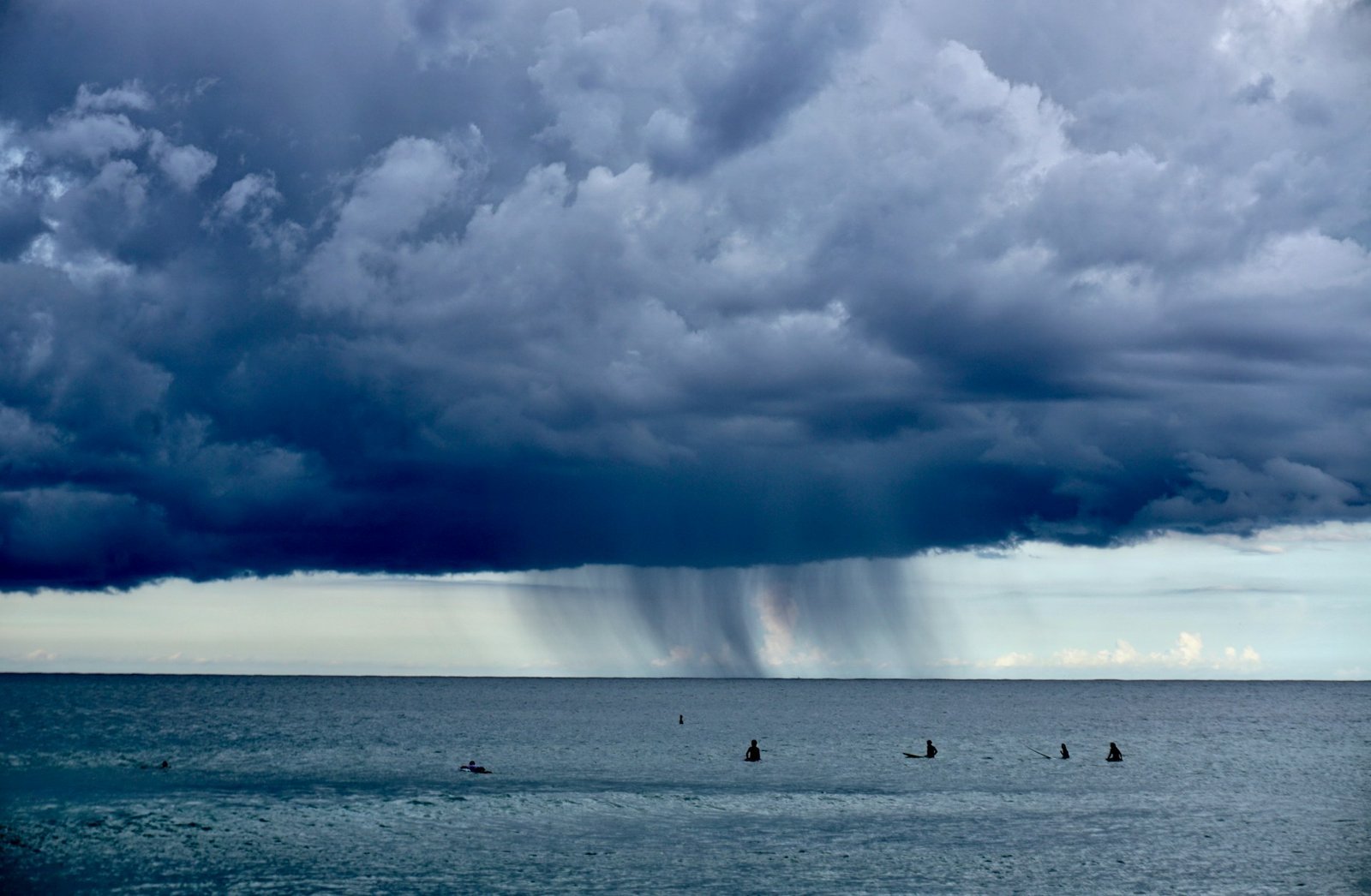
Pros, cons, and alternative spots to make the most of the wet season
When thinking about surfing in Indonesia, the first thing that comes to mind is the
dry season, which runs from
May to September, with perfect waves, offshore winds, and clear skies. But... what about the
rainy months, between
November and March? Is it a bad time to surf?
Not necessarily.
In this guide, we explain the
pros and cons of surfing during the
wet season and share a list of
alternative spots that work better during this time of year.
✅ Advantages of Surfing in the Rainy Season
- Less crowd in the water: in many spots, the crowd disappears. It's an opportunity to enjoy waves without fighting for every set.
- Lower prices: accommodation, motorbike rentals, and even flights tend to be cheaper.
- More local and authentic atmosphere: as mass tourism decreases, the experience becomes more intimate and cultural.
- Some spots improve with onshore winds: especially those sheltered by bays or with the right orientation.
❌ Disadvantages of the Rainy Season
- More unstable conditions: heavy rains, sudden storms, and days without surf.
- Onshore winds at many popular spots: like Uluwatu or Padang Padang.
- Less sunlight: and more cloudy or gray sky days.
- Risk of infections in open wounds: due to water pollution at urban beaches like Canggu or Kuta.
🗺️ Alternative Spots for Surfing in the Rainy Season
🔄 Bali (East Side)
- Keramas: powerful, tubular waves with a reef bottom. They improve with west wind.
- Serangan: versatile spot, ideal for intermediates and advanced surfers. Sheltered from onshore winds.
- Nusa Dua: consistent lefts and rights, although access is by boat.
🌀 Lombok
- Ekas Inside and Outside: work well with medium swells and west wind. Little crowd.
- Seger Reef (Kuta): fun right, best early in the morning before strong winds.
🌴 Sumbawa
- Lakey Peak: although it’s not its best time, some days in the wet season can offer perfect sessions without crowd.
💡 Quick Recommendations
- Check the daily wave report and stay flexible.
- Bring a raincoat and board/backpack protection.
- Have a good travel insurance, especially if you’re going to remote areas.
- Take the opportunity to combine surfing with other activities: yoga, local culture, sightseeing.
🏄♂️ Conclusion
Surfing in Indonesia during the rainy season is not for everyone, but if you enjoy adventure, are flexible, and seek less crowd in the water, it can be an unforgettable experience.
Explore
alternative spots, embrace the unpredictable nature of the tropical weather, and enjoy a
more authentic and wild Indonesia.