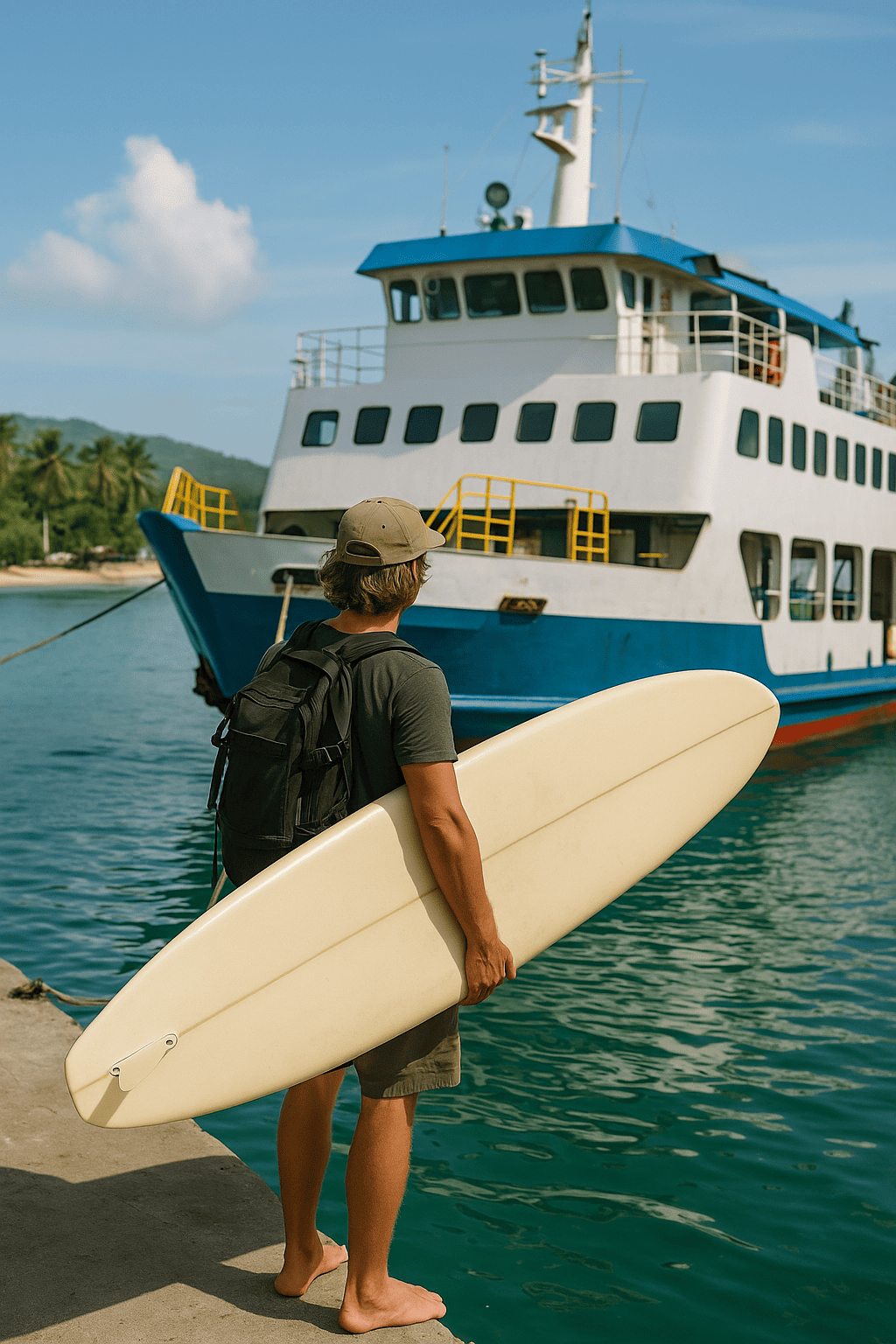
Practical guide for surfers traveling with longboards or complete quivers
Traveling through Indonesia is a constant adventure. With over 17,000 islands, the journeys between surf spots often involve
boats, ferries, flights, and motorcycles. If you're traveling with a short board, the logistics are simple. But if you're bringing
a longboard or more than one board, it can become a challenge… and a trap for your budget.
In this guide, I share real tips for getting around the islands with
large or bulky boards without ending up paying a fortune or damaging your quiver in the process.
📦 Choose your boardbag wisely
Investing in a
quality boardbag is key. Models with wheels, internal padding, and compartments help prevent damage and make transportation easier. Don't take rigid coffin-style bags if you plan to get on small boats: they take up a lot of space and often incur extra fees.
✈️ Flights: which airlines treat surfers best
- AirAsia: usually charges by weight, but you can add sports luggage at a good price online.
- Garuda Indonesia: on some routes, includes a surfboard for free in checked luggage (check before you buy).
- Lion Air and Wings Air: cheap but very strict. Many times they refuse to transport long boards (+7 feet).
🔍 Tip:
always book luggage online. At the airport, fees can double.
🚢 Public ferries and local boats
In places like Lombok, Sumbawa, or Flores, public ferries are a great option. They almost always accept large boards
at no extra cost, although they are not well protected. Wrap your board in foam or towels if you are on deck.
On small or local boats (e.g., from Sumbawa to Lakey Peak), negotiate before boarding. Many times you can include the board in the price of the trip if you settle the deal calmly.
🛵 Ground transportation: motorcycle, bemo, or pick-up
If you need to get around on a motorcycle, drivers who carry boards are common in surf areas. Ideally, look for motorcycles with
side-racks or extensions.
For longboards, the best option is to rent or share a
pickup truck or use a
bemo (local van). Always agree on the price beforehand and specify that you are carrying large boards.
💡 Extra tips to save and avoid problems
- Share the boardbag with friends: two boards in one large bag = less total weight and lower cost.
- If flying with a longboard, notify in advance: some small planes do not accept it without prior notice.
- Ask your accommodation or surf camp for help organizing transport: they often have reliable contacts and better prices.
- Bring straps or ties to secure the board yourself if necessary.
🧭 Conclusion
Traveling through Indonesia with one or more large boards may seem complicated, but with some
foresight and flexibility, it is totally possible. Take advantage of the ferries, choose your flights wisely, and don't underestimate the power of negotiating calmly. Because in the end, the reward is clear:
arriving at remote places with perfect waves and your favorite board in one piece.